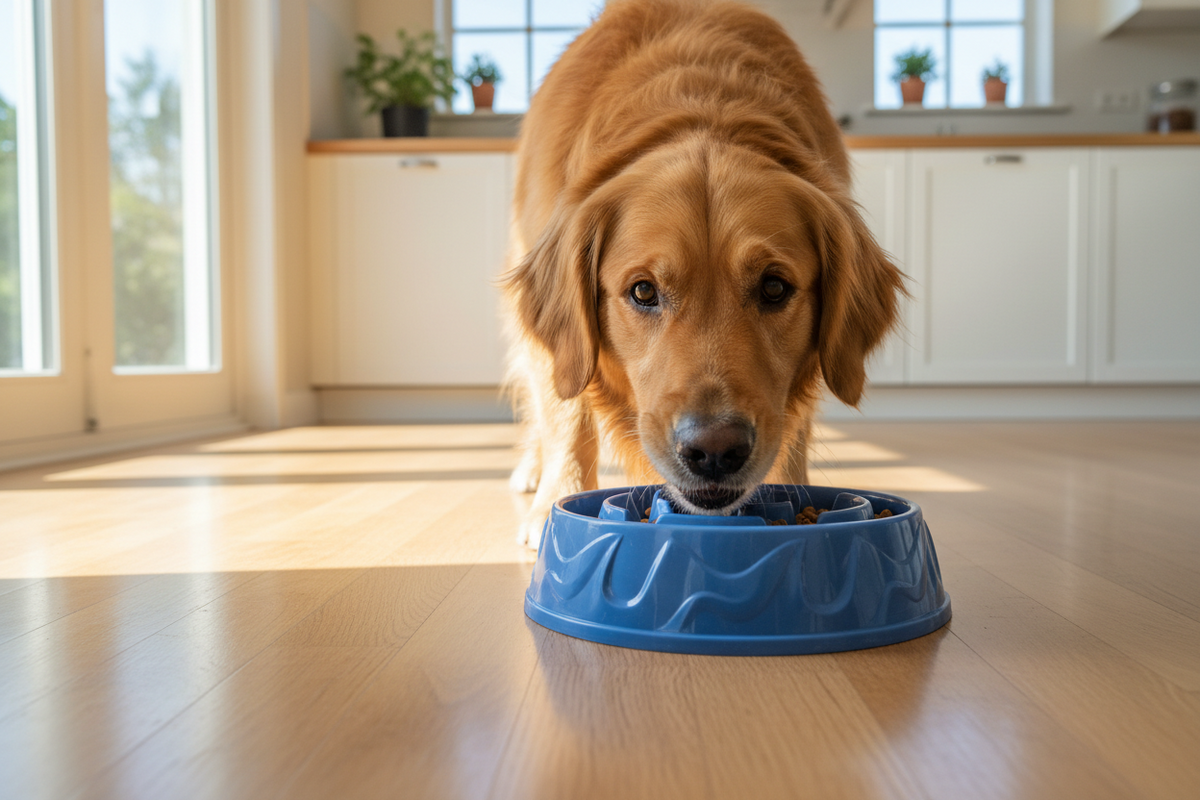
Anti-gorge bowls and non-tip water bowls: eat better, slower, and without spills
If your dog or cat finishes their food in seconds, snorts while eating, or even vomits shortly after eating too quickly, it is not a quirk or "real hunger": it is a habit that can lead to serious problems, from gastric torsion (especially in large dogs) to heavy digestion and being overweight. A slow-feeder bowl resolves this simply, without changing their food or forcing anything.
👉 Discover our entire collection of dog and cat bowls.
How does a slow-feeder bowl work?
The design is simple but very effective: instead of a smooth bowl, the feeder has ridges, mazes, or compartments that force your pet to navigate obstacles to reach their food. This multiplies mealtime (from seconds to several minutes) and naturally reduces the amount of air they swallow along with their food, which is exactly what causes bloating and discomfort.
We have several designs, all with the same goal but different levels of difficulty and aesthetics:
- Fish-shaped slow-feeder bowl, with a maze-like design.
- Hexagonal slow-feeder bowl.
- Pentagonal slow-feeder bowl.
- Square slow-feeder bowl.
They are all suitable for both dogs and cats, and are especially recommended for breeds prone to eating quickly (Labradors, Beagles, most highly food-motivated dogs) and for cats that compete for the bowl in multi-pet households.
Elevated feeders: the other half of the problem
Eating too quickly is not the only risk factor. Posture also matters, especially in large or senior dogs. A bowl at floor level forces them to lower their neck significantly, which can encourage swallowing more air and puts strain on the cervical spine.
For this reason, we often recommend combining the slow-feeder bowl with an Adjustable Elevated Double Stainless Steel Bowl, which allows you to adjust the height according to your dog's size and improves both posture and digestion.
Non-tip water bowl: hydration without puddles
The other typical problem, especially in homes with large dogs, playful pets, or clumsy puppies, is the water bowl that flips or spills with every movement. A non-tip water bowl solves this with a wide, stable base or a spill-proof design that does not move even if your dog sticks their whole head inside.
We recommend the Portable Spill-Proof Bowl and Waterer, perfect for both home use and walks and travel; and if you are looking for something to leave out all day without worry, the Automatic Water and Food Dispenser, with large capacity so you don't run out of water even when you aren't home.
🧭 How to choose the right bowl for your pet
- If they eat very quickly: maze-type slow-feeder bowl (fish, hexagonal, pentagonal, or square, depending on the size of their snout and what works best for them).
- If they are a large or senior dog: combine it with an adjustable elevated feeder.
- If they constantly knock over or spill water: non-tip or spill-proof water bowl.
- If they spend hours alone at home: automatic water and food dispenser with good capacity.
One final tip: if you notice your dog continues to eat too quickly even with a slow-feeder bowl, or if they ever present with a bloated abdomen, unproductive retching, or significant discomfort after eating, consult your veterinarian as soon as possible: in deep-chested dogs (Danes, German Shepherds, Great Danes, among others), it can be a sign of a serious problem that requires immediate attention.
Frequently asked questions
Are slow-feeder bowls also for cats?
Yes, all our models are designed for dogs and cats. They work just as well for cats that eat too fast or compete for food in multi-pet households.
How long does it take for my dog to get used to the slow-feeder bowl?
Most dogs and cats adapt in a few days. At first, it may seem clumsy or frustrating for them, but within less than a week, they usually master it without any problem.
What is a non-tip water bowl and why do I need one?
It is a water bowl designed with a wide or spill-proof base that prevents it from tipping over or spilling with your pet's normal movement while drinking; it is ideal for large dogs, clumsy puppies, or homes with small children nearby.
Why is it dangerous for my dog to eat too quickly?
Eating too quickly increases the risk of swallowing excess air, which can cause bloating, digestive discomfort, and, in severe cases (especially in deep-chested breeds), gastric torsion, a serious veterinary emergency.
Should I combine the slow-feeder bowl with an elevated one?
If your dog is large, senior, or has back or neck problems, yes, it is recommended. The combination improves both eating speed and posture during meals.